

Windows 11 includes several settings that can use information about your activity, preferences, and how you use your PC to personalize ads, recommendations, offers, and other content.
One of the most important is the Windows Advertising ID, which gives supported apps an identifier they can use for personalized advertising. But that isn’t the only place where Windows 11 personalization happens.
Microsoft also provides recommendations in Settings, suggestions in the Start menu, content on the Lock screen, Windows tips, and personalized recommendations based on how you’ve told Windows you use your PC.
Fortunately, you can turn off many of these features.
In this guide, I’ll show you 5 Windows 11 settings you can disable to reduce personalized ads, recommendations, offers, and promotional content.
Quick answer: To disable personalized ads in Windows 11, open Settings > Privacy & security > General/Recommendations & offers and turn off Advertising ID. You can further reduce recommendations by changing Start, Lock screen, Notification, and Device usage settings.
1. Turn Off Advertising ID and Recommendation Settings
Let’s start with the privacy settings that have the most direct connection to personalized advertising.
Right-click the Start button and select Settings.
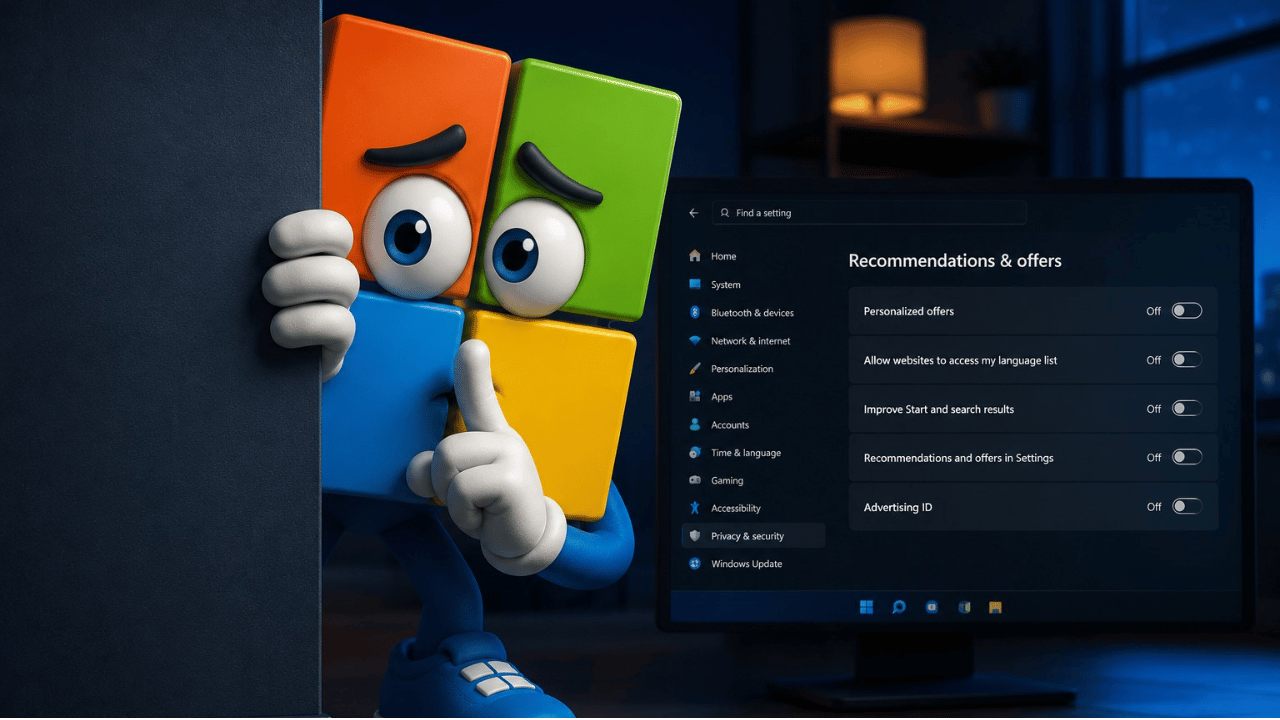
Navigate to: Privacy & security > General
On newer versions of Windows 11, Microsoft is replacing the General privacy page with a section called Recommendations & offers, so the wording you see may depend on your Windows 11 version.
Here you’ll find several privacy and personalization controls, including:
- Personalized offers
- Allow websites to access my language list
- Improve Start and search results
- Recommendations and offers in Settings
- Advertising ID
If you don’t want these personalization features, you can switch them Off.
What does Advertising ID do in Windows 11?
This is the setting worth paying particular attention to.
Windows creates a unique Advertising ID for each user on a device. Supported apps can access this identifier, and app developers and advertising networks can associate information they collect with the ID to provide more relevant advertising and personalized experiences.
In simple terms, it gives supported Windows apps an identifier that can be used as part of ad personalization.
If you’d rather not allow that, turn Advertising ID off.
There’s an important distinction, however.
Disabling Advertising ID does not remove ads from Windows 11.
It prevents supported apps from using this particular Windows advertising identifier for personalization. Apps, websites, Microsoft services, and third parties can still use other advertising systems.
2. Reduce Recommendations in the Windows 11 Start Menu
The Start menu is another area worth checking if you want a less personalized Windows experience.
Open Settings > Personalization > Start
Windows 11 provides several controls that determine what appears in and around the Recommended section of Start.
Depending on your Windows 11 version, you’ll see options related to recently added apps, frequently used apps, recently opened items, recommendations, and other personalized content.
Go through the available options and turn off the recommendations you don’t want Windows displaying.
Don’t expect the entire Recommended section to necessarily disappear. Some of these controls determine what Windows puts into the section rather than removing the section itself.
If you don’t use Windows recommendations, disabling these options can make Start feel cleaner and less cluttered.
3. Turn Off Lock Screen Tips and Suggested Content
Your Windows 11 Lock screen can also display more than just your wallpaper and the time.
Go to Settings > Personalization > Lock screen
If you use Picture or Slideshow, check for the option:
Get fun facts, tips, tricks, and more on your lock screen
Turn it Off if you don’t want Microsoft providing this additional content on your Lock screen.
There’s another detail worth knowing about Windows Spotlight.
Spotlight automatically rotates images supplied by Microsoft and can display additional Windows information, tips, tricks, and notifications.
If you prefer a simple Lock screen, select Picture instead of Windows Spotlight and choose your own wallpaper. Then disable the additional tips and content option if it’s available.
4. Disable Windows 11 Tips and Suggestions
Windows can also surface suggestions through its notification experience.
Navigate to Settings > System > Notifications
Scroll down and expand Additional settings.
Depending on your Windows 11 version, you may find options such as:
Get tips and suggestions when using Windows
Show the Windows welcome experience after updates and when signed in to show what’s new and suggested
and
Suggest ways to get the most out of Windows and finish setting up this device
If you don’t find these suggestions useful, disable the available options.
These aren’t necessarily conventional advertisements. They’re better described as Windows suggestions, recommendations, and setup prompts.
Still, if you’re trying to create a cleaner Windows 11 experience with fewer unsolicited recommendations, they’re worth checking.
5. Turn Off Device Usage Personalization
This is one of the more interesting Windows 11 personalization settings because it’s easy to enable during setup and then forget about.
Navigate to Settings > Personalization > Device usage
Windows asks you to specify how you use your computer and provides categories such as:
- Development
- Gaming
- Family
- Creativity
- School
- Entertainment
- Business
These choices aren’t just labels.
Microsoft says selecting Device usage options can result in tailored tips, recommendations, and personalized ads.
For example, selecting Gaming can lead to an Xbox Game Pass trial or gaming-related app and website suggestions.
Selecting Business can result in a Microsoft 365 Business trial offer.
Similarly, other categories can influence the recommendations Windows provides.
If you don’t want Windows personalizing its experience based on these usage categories, switch the enabled Device usage options Off.
Will Turning These Settings Off Remove All Ads From Windows 11?
No.
That’s probably the most important thing to understand before changing these settings.
Windows 11 doesn’t have a single master “Disable all ads” switch.
Turning off the settings above can reduce personalized advertising, recommendations, tips, offers, and promotional content, but it won’t block every advertisement you might encounter.
For example, disabling Windows Advertising ID doesn’t prevent a website from using cookies or other technologies for interest-based advertising. Third-party apps can also have their own advertising and privacy systems.
Think of these settings as controls over specific Windows personalization and recommendation features rather than a system-wide ad blocker.
Should You Disable Advertising ID in Windows 11?
If you don’t care about receiving personalized ads inside supported Windows apps, there’s little reason to keep Advertising ID enabled.
Turning it off doesn’t stop apps from working, and it doesn’t prevent you from seeing advertisements altogether. Instead, you’re telling Windows apps not to use that particular identifier to personalize advertising.
The other settings are more subjective.
You might enjoy Windows Spotlight, Start recommendations, or Windows tips. In that case, there’s nothing inherently wrong with leaving them enabled.
But if you prefer a cleaner Windows experience with less personalization and fewer Microsoft recommendations, disabling the five areas covered above is a good place to start.
Frequently Asked Questions
Does Windows 11 have an Advertising ID?
Yes. Windows 11 generates a unique Advertising ID for each user on a device. Supported apps can use the identifier for purposes that include providing more relevant advertising and personalized experiences.
How do I turn off personalized ads in Windows 11?
Open Settings > Privacy & security > General or Recommendations & offers, depending on your Windows 11 version, and turn off Advertising ID. You can also review the other personalization and recommendation options available on the same page.
Does disabling Advertising ID stop all Windows 11 ads?
No. Disabling Advertising ID prevents supported apps from using that particular Windows identifier for personalized advertising. It doesn’t block all ads, website advertising, cookies, or advertising systems used independently by third-party apps.
Why do I see recommendations in Windows 11?
Windows includes several recommendation systems. Content can appear through Start, Settings, notifications, Device usage personalization, Windows Spotlight, and other Microsoft experiences. Which recommendations you see depends on your settings and Windows version.
Can Device Usage settings be used for ads?
Yes. Microsoft states that selecting Device usage categories can result in tailored tips, recommendations, and personalized ads. If you don’t want this personalization, go to Settings > Personalization > Device usage and turn off the categories you’ve selected.
Final Thoughts
Windows 11 gives you considerably more control over recommendations and advertising personalization than you might initially realize—the problem is that those controls aren’t located in one place.
You’ll find them scattered throughout Privacy & security, Personalization, Start, Lock screen, Notifications, and Device usage.
If personalized advertising doesn’t interest you, start by disabling Advertising ID. Then work through the remaining settings and decide which Windows recommendations and promotional experiences are actually useful to you.
You don’t have to disable everything. The goal is simply to make Windows behave the way you want it to.